

Stage 3. A Cost Minimisation Analysis Of Minor Injuries Telemedicine.
|
Objective To compare, from the viewpoints of the National Health Service and patients and their families, the costs associated with telemedicine, an on-site specialist registrar and routine practice in the management of minor injuries presenting to a GP supported peripheral emergency department. Methods A cost minimisation analysis of minor injuries telemedicine was performed alongside a randomised clinical trial in a peripheral emergency department in Gloucestershire, United Kingdom, with links to the emergency department of the nearest district general hospital. Six hundred attendees at the peripheral emergency department, who, in the opinion of the assessing nurse required a further opinion from a doctor, took part in the trial. The main outcome measures were the costs to the National Health Service and patients and their families over the seven days following randomisation. A sensitivity analysis was also performed. |
|
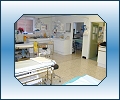
Tewkesbury Hospital, A&E Department. Click Here to see a larger version (243kb) |
Results
The mean cost to the National Health Service for telemedicine patients over the seven days was £78.61, whilst that for face-to-face consultation with a specialist registrar was £48.03 and with routine practice was £39.15. For costs incurred by patients and their families the respective figures were £58.24, £41.88 and £43.95. The sensitivity analysis showed the initial results to be robust.
Conclusions
Telemedicine is not a cost-effective option for providing minor injuries care in a GP supported peripheral emergency department.